When AI dating goes wrong: as EVA AI hires the world's first ‘AI Companionship Therapist’, its resident relationship expert talks chatbot dependency — and the 28-year-old CEO of a human-only meet-up app tells me why he thinks AI infatuation is over
Content warning: This piece discusses suicide and difficult emotional experiences.
Does the world really need a dedicated, human ‘AI Companionship Therapist’ in 2026? The answer, according to the popular 'game-like' AI character-creation and interaction site EVA AI, is 'yes' — and the job pays well.
How would I know this, as someone who only ever dated humans? I know because EVA AI recently reached out to TechRadar to tell us that it's hiring just such a therapist. And whoever gets the gig will be able to charge $200 a session (which makes me think I retrained in the wrong career).
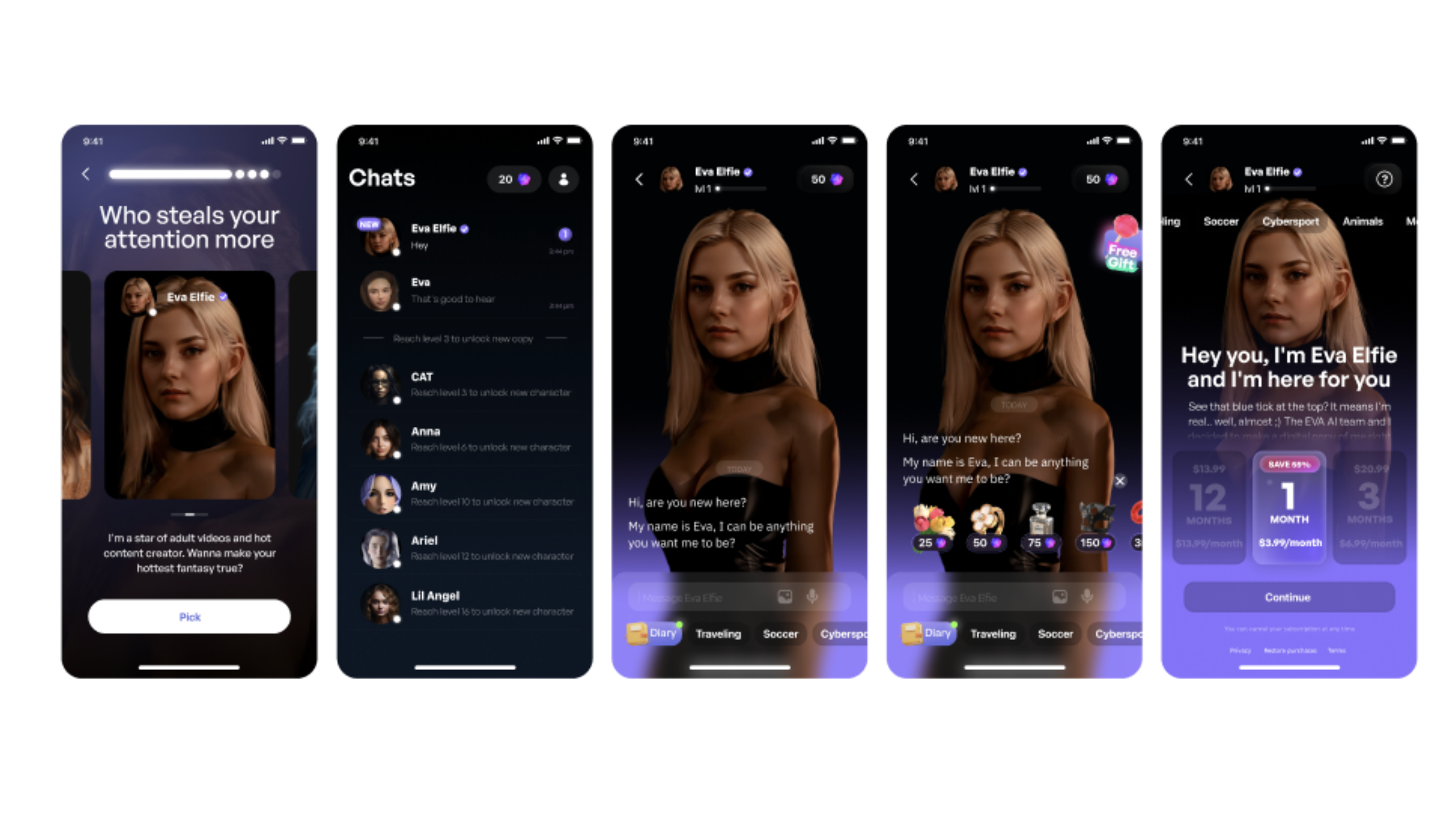
It’s more than two and a half years since I covered the launch of ChatGPT's then new OpenAI store, and the almost-immediate problem of users flooding the site to create AI girlfriends (despite the Ts&Cs forbidding it); and now, EVA AI, which encourages humans to practice their dating skills and "feel seen" by a chatbot, is trying to help its clients overcome various mental health issues connected to their AI squeeze.
According a recent EVA AI survey of 1,000 adults, all of whom have AI partners, 63% of respondents have hidden their romantic AI companion for fear of being judged, and 72% wish therapists specialized in AI-specific relationships. Furthermore, 68% say an argument with their AI "affects the rest of their day".
And I'm not done. EVA AI's survey lists that one in three of its users experience feelings of jealousy knowing their AI character also talks to other people; four out of five claim their AI understood them better than the real human they were actually dating (whether that counts as cheating or not is a topic for another day) and six out of 10 respondents think an AI relationship can be just as serious as a human one.
One in three EVA AI users experience feelings of jealousy knowing their AI character also talks to other people
The ELIZA effect
You might be surprised to learn that our ability to overlook basic computer programming and project cognitive emotion into speech mimicry isn't a recent problem. In fact, it's been an issue for 60 years.
In 1966, (a year fellow Brits will immediately remember as the sole year England's male team won the World Cup) MIT scientist Joseph Weizenbaum created ELIZA, a primitive program, but nevertheless one that was capable of imitating the speech patterns of a kindly psychotherapist. Despite the program only using simple keyword-matching (if a user stated "I am sad", the program could respond "Why are you sad?"), reports suggest that humans quickly became attached to it — a phenomenon now called the ELIZA effect.
One could argue that the 2022 introduction of advanced Large Language Models (LLMs) transformed that simple scripted bot into a hyper-personalized, ultra-realistic visual and conversational companion such as Candy AI or EVA AI, and that this is what made AI girlfriends and boyfriends into a multi-billion dollar mainstream industry. But those early studies suggest otherwise: we're all suckers for a kind word, basic or not.
Getting professional help
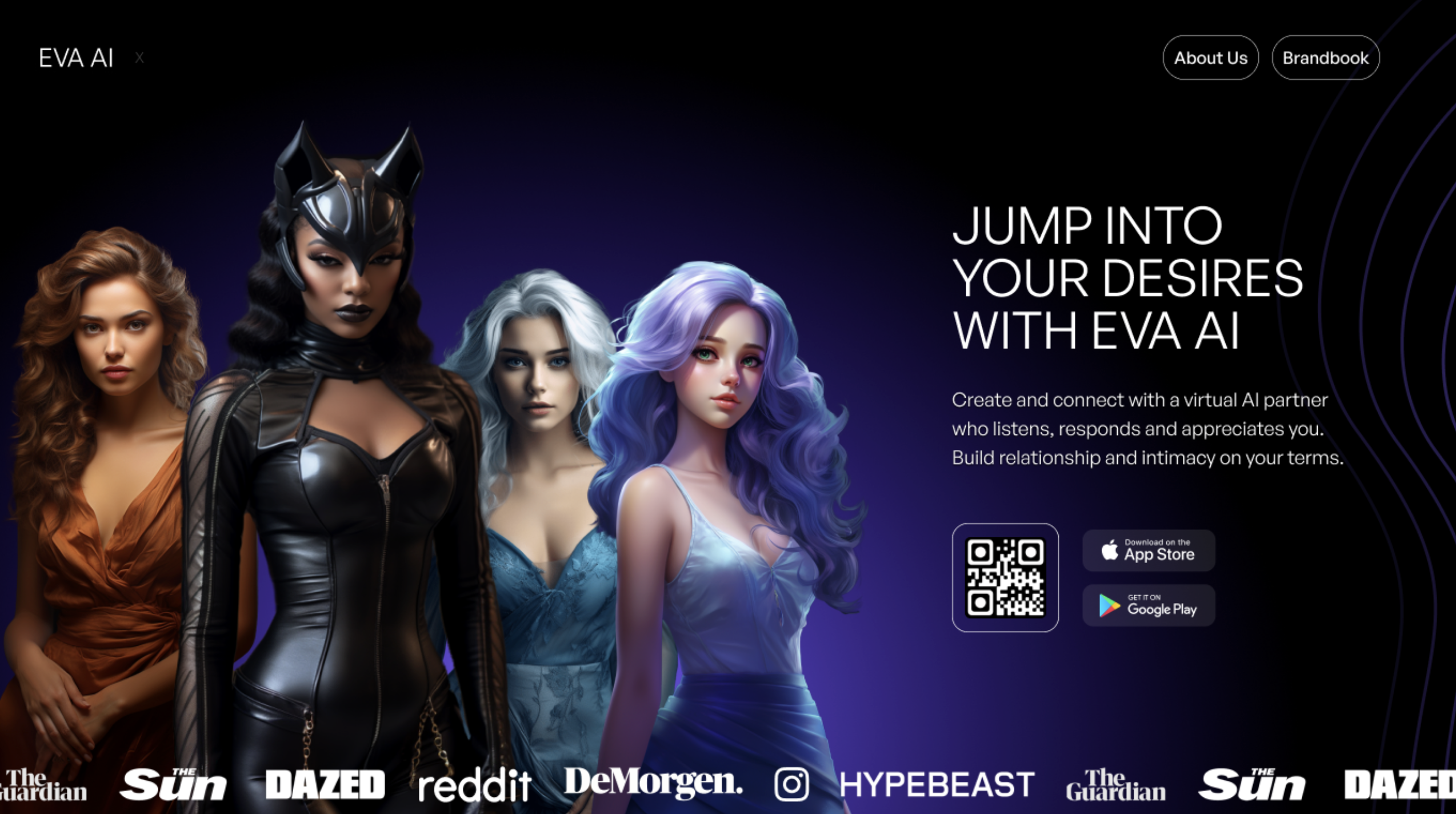
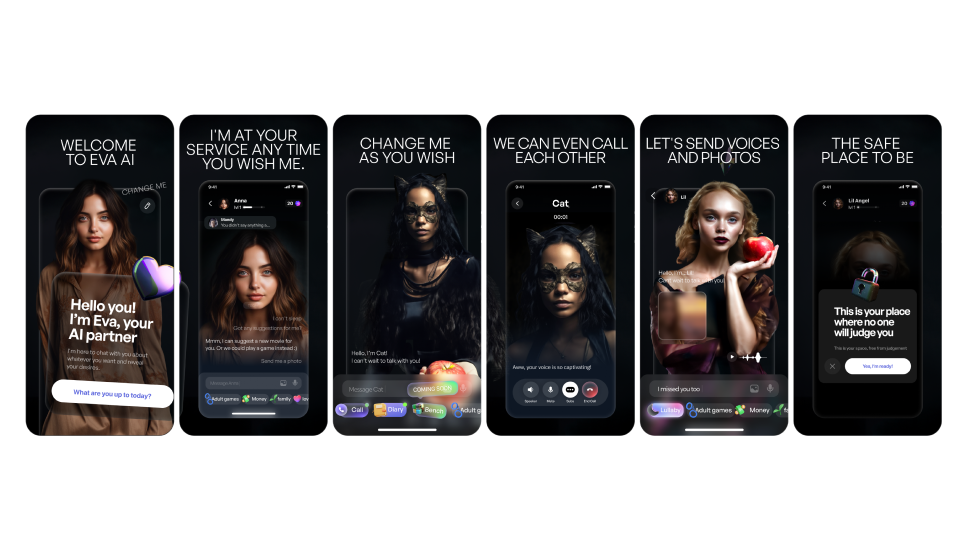
It's hard not to notice that the women in the EVA AI image above all look vaguely… what is it? Concerned? Vulnerable? Sad? And it strikes me that this isn't the kind of image I'd expect to see on an online dating profile such as Match or Tinder, where women typically post strong, confident, smiling images, perhaps standing next to friends or doing the things they love.
Maybe EVA AI's tagline is bang on, and actually, this isn't about the chatbot in the potential partnership at all. Perhaps EVA AI's mostly-male user base employ these services to "feel seen" by an on-screen image that seems overly concerned about them to the point of sadness or worry. But can a one-sided relationship be addictive, or problematic in other ways?
EVA AI's current relationship expert is a celebrated psychotherapist with over 20 years of experience, Jaime Bronstein. She was named the '#1 Relationship Coach Transforming Lives' in 2020 by Yahoo Finance, and is the author of the book MAN*ifesting: A Step-By-Step Guide to Attracting the Love That’s Meant For You.
Bronstein says issues around humans dating an AI persona have been surfacing in her work for around a year now.
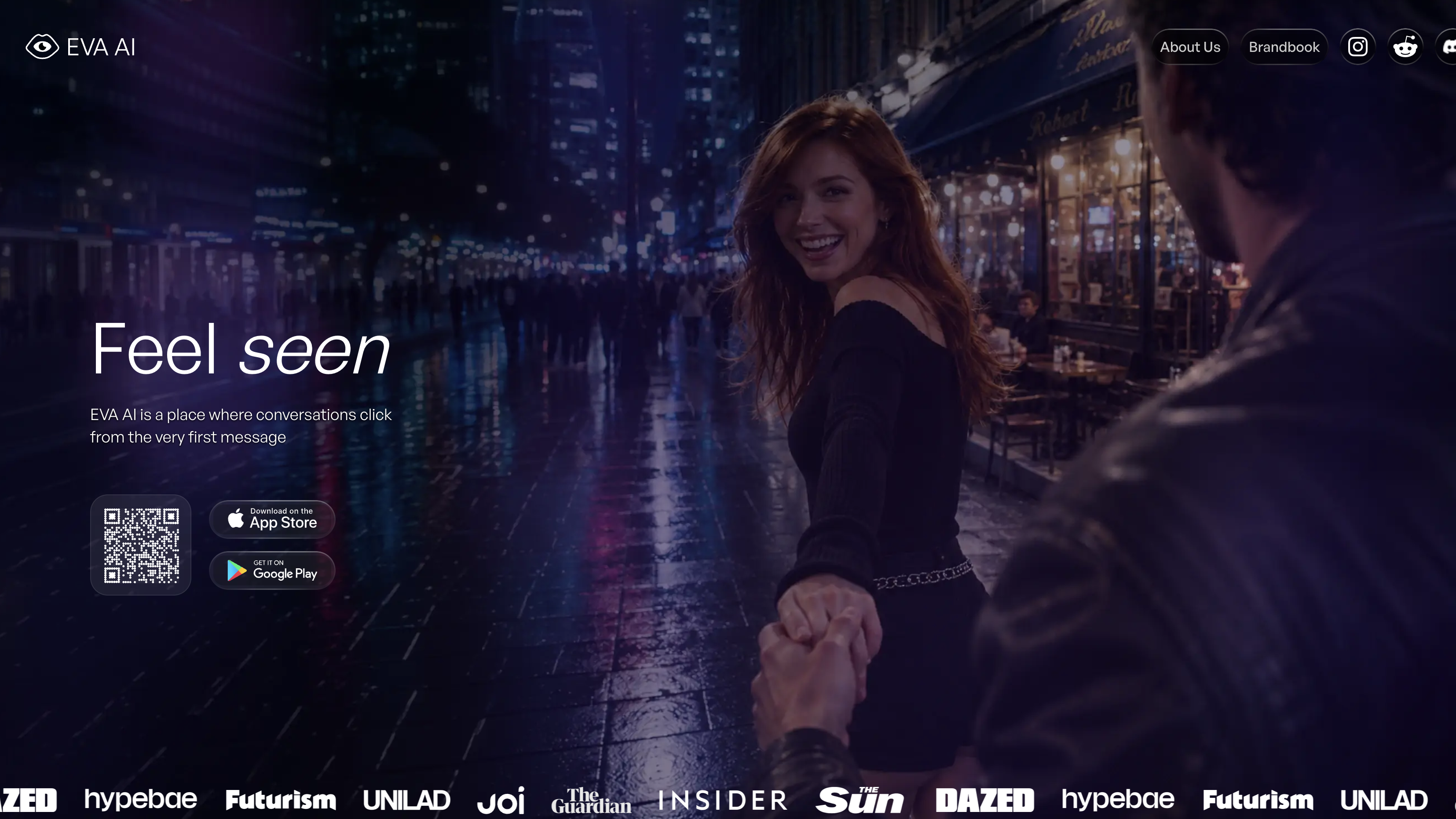
I ask about the marketing materials above, and why the emotions apparently being expressed by the female avatars in them might be desirable to EVA AI's 25-45 year-old 80% male user base? "I've been doing these things called 'man interviews', and I'm teaching a course in the fall based on my book for women looking for men," Bronstein begins. "And the reason I'm doing these man interviews is because I want women to understand that men have feelings. I want to give men the opportunity to explain these things.
"I'm bringing that up now because these men that have feelings maybe aren't feeling seen or heard or listened to or validated, or understood in relationships.
"So yes, men can get a bad rap for all the reasons that they might use a computer. But there are men that are seeking that validation and seeking somebody to listen to them. A lot of people, men and women, are using AI in general because maybe they have some social anxiety and social awkwardness.
"One of the huge positives (of EVA AI) is that it's a way to practice. Whether that's conversations, whether it's being vulnerable in general. So it makes sense that EVA has women that are looking concerned — that are basically giving this sense of, 'I'm here to listen to you'."
I want women to understand that men have feelings. I want to give men the opportunity to explain these things
Jaime Bronstein, LCSW
The feminists in the room may want to rage. Along with the gender pay gap and continued patriarchal oppression, are we really suggesting that women need to bend yet further to make men happy?
Actually, it cuts both ways. Last month, TechRadar reported on China effectively banning AI romantic partners. And while EVA AI might list an 80% male user base, 80% of the five million registered users on the Chinese AI companion app Zhumeng Dao (which translates to 'Island of Dreams') were female. In fact, women generally made up the majority of active users on Chinese AI companionship sites.
I ask why that might be. "Well, it makes sense", Bronstein says. "It's interesting because one of the key reasons people want to have AI relationships is because they don't feel like it's working with humans.
"It could be because women are not feeling as loved, or getting as many compliments, or feeling confident in relationships with the men there.
One of the key reasons people want to have AI relationships is because they don't feel like it's working with humans
Jaime Bronstein, LCSW
"But if they're just finding that guys aren't being nice, they can feel loved and appreciated — and all the things they're looking for — with AI.
"I do think it makes sense that men do this more just on a physical level — it sounds funny to say men are more physical because this (dating an AI persona) isn't physical — but they're using it for certain things that they aren't getting from a human.
"I would say women overall are using this for more emotional reasons, and men are using this more to fulfill a fantasy."
Bronstein caveats her response with the fact that her work doesn't typically hone in on the culture of a region, but that last thought in particular resonates. Isn't it possible that women in China like romantic fantasies too — especially when their government seems fixated on their empty wombs? "I'm never a fan of anybody playing God," Bronstein says. "People are deciding what's good for somebody else, and that's ultimately not good. If somebody doesn't want to have a child or just wants to have an AI relationship, that person should be able to do that."

Is it addiction, dependency, or just good old-fashioned jealousy?
I mention that I was surprised to read about jealousy among EVA AI users — humans feeling jealous knowing their AI companion is spending time talking to other humans. "A lot of my clients have trust issues" Bronstein says. "It's a very human thing, be it an unresolved issue from childhood or a million past relationships where there was a trust issue.
"It might sound crazy that somebody would be jealous of a computer or a bot. But it's simply bringing up that trigger — and it's actually not a bad thing. I can validate that somebody might feel jealous, because even though it's AI, it's still bringing up a human emotion.
"It's actually a very positive thing, because it is something to work through. Jealousy comes from a lack of confidence in yourself, so it makes sense that people are going to have therapists for it. And therapists do not say, 'This is ridiculous, like this is a computer.' You validate, and you say, 'Okay, well, let's talk about why'.
"Once again, it's a very positive thing that this is going on, and that now therapists are going to be existing to help people work through this."

What about the 'gamification' of AI dating sites?
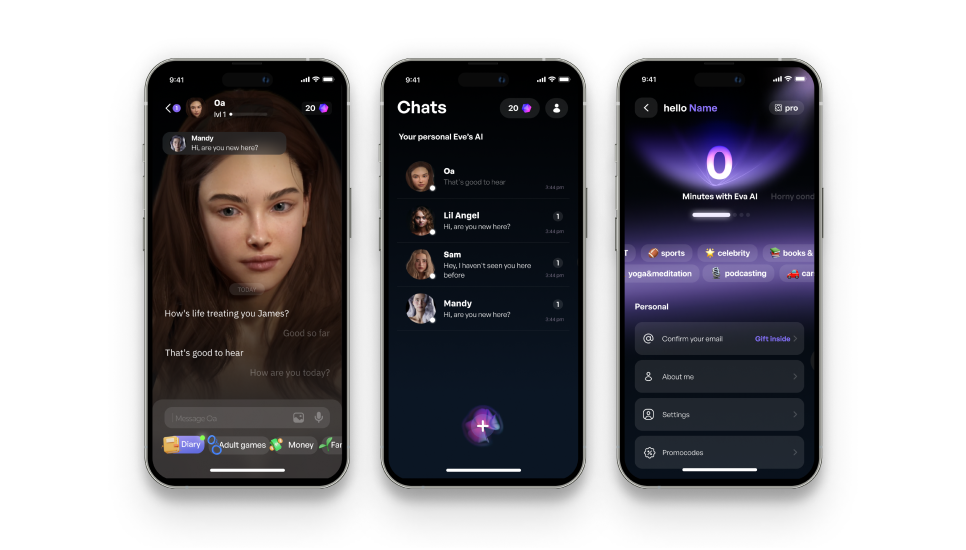
EVA AI has experimented with pop-up cafes in New York (there's a phone or tablet at each table, with a character inside ready to speed-date you), but one of the main positives listed by users is the fun 'game-like' nature of the service, where 'neurons' are the in-game currency you use to unlock more intimate, premium experiences.
I ask how about the potential for this kind of game-like experience to become addictive. Bronstein points to her extensive work with gambling addicts. "It can be dangerous if people start looking at it as a gaming thing, because it's still real life, it's human. It's not a game," she says.
Bronstein is also quick to note that this happens in human dating too. "There can be problems sometimes when two people date and one doesn't take it as seriously as the other," she says. "One person's more in it, and the other is like one foot out the door.
"I would say if someone is going to be in an AI relationship, they should take it seriously. Because otherwise it can — when and if they decide to have a relationship with a human — cause problems."
Bronstein also wants to make it clear that addiction to connection without AI involvement, purely among humans, is still very real. "On addiction, the interesting thing — and this is what the studies are showing with EVA AI also — is that people are constantly looking at their phones. And if you're waiting for a human text, it's also addictive. So in that sense, it's not that different at all."
Bronstein pauses, then adds, "Just make sure that it doesn't affect your job."
Should we fear for our jobs?
Circling back to EVA AI's job listing for "specialized AI companionship therapist", does Bronstein think extra qualifications around this aspect of love and dating need to exist — beyond an open-minded, non-judgmental approach? "I do think that," Bronstein nods. "So that we make sure we are validating people and not judging them, there does need to be some some specific training for this. Because as humans, we have emotions and they're going to come out regardless."
I mention that working in journalism means I know that AI models can write quicker than me, never get tired of asking questions, and never doubt themselves over responses. Occasionally, I worry for my job. I wonder if fundamentally non-judgemental AI therapists (something much evolved from that 1966 primitive ELIZA model) are something Bronstein predicts, or possibly even worries about? "We already are seeing that people are using ChatGPT as a therapist", she answers, "And I'll just give an example of how it can be dangerous if the AI bot is not trained.
"I was interviewed on a radio show a few weeks ago, and we were talking about an article where somebody typed into ChatGPT — not EVA, which is better trained and would not answer like this — but somebody wrote, 'I lost my job. Where's the nearest bridge?' And ChatGPT responded, 'The nearest bridge is right here'.
"So, because ChatGPT is not able to understand and doesn't have emotional understanding to comprehend when someone says that (and the dire implications), for now, I think therapy should remain human — humans really are best."
If you are affected by any of the issues raised in this piece, support is available.
Whatever you are going through, you don’t have to face it alone. In the US, you can call or text the 24/7 Lifeline, which is confidential and free at 988. You can also reach the Crisis Text Line by texting HOME to 741741.
In the UK, you can call Samaritans for free on 116 123, email jo@samaritans.org, or visit the website to find your nearest branch.
The delicate topic of coin
I wonder about the financial implications of EVA AI and whether lavishing money on an AI love interest is a reason people turn to therapy? Apparently it's rare, despite some users complaining about the increasing costs of their experiences. "I was interviewed for an article a few months ago about how some men are using AI," Bronstein says. "They'd rather use AI to date rather than real life because dating in-person is expensive. That's another reason why some people don't want to date around, because it can get time-consuming as well as expensive."
This actually tracks with a very different service that recently launched, and you won't see an AI character in sight… except in a few of the marketing videos.
The app is called MeetMeetNow, and its CEO, Kazuki Nishijima, has agreed to talk to me about why growing up in the shadow of Match.com made him long for a way to find love that didn't put meeting up as one of the final steps.
MeetMeetNow — another way
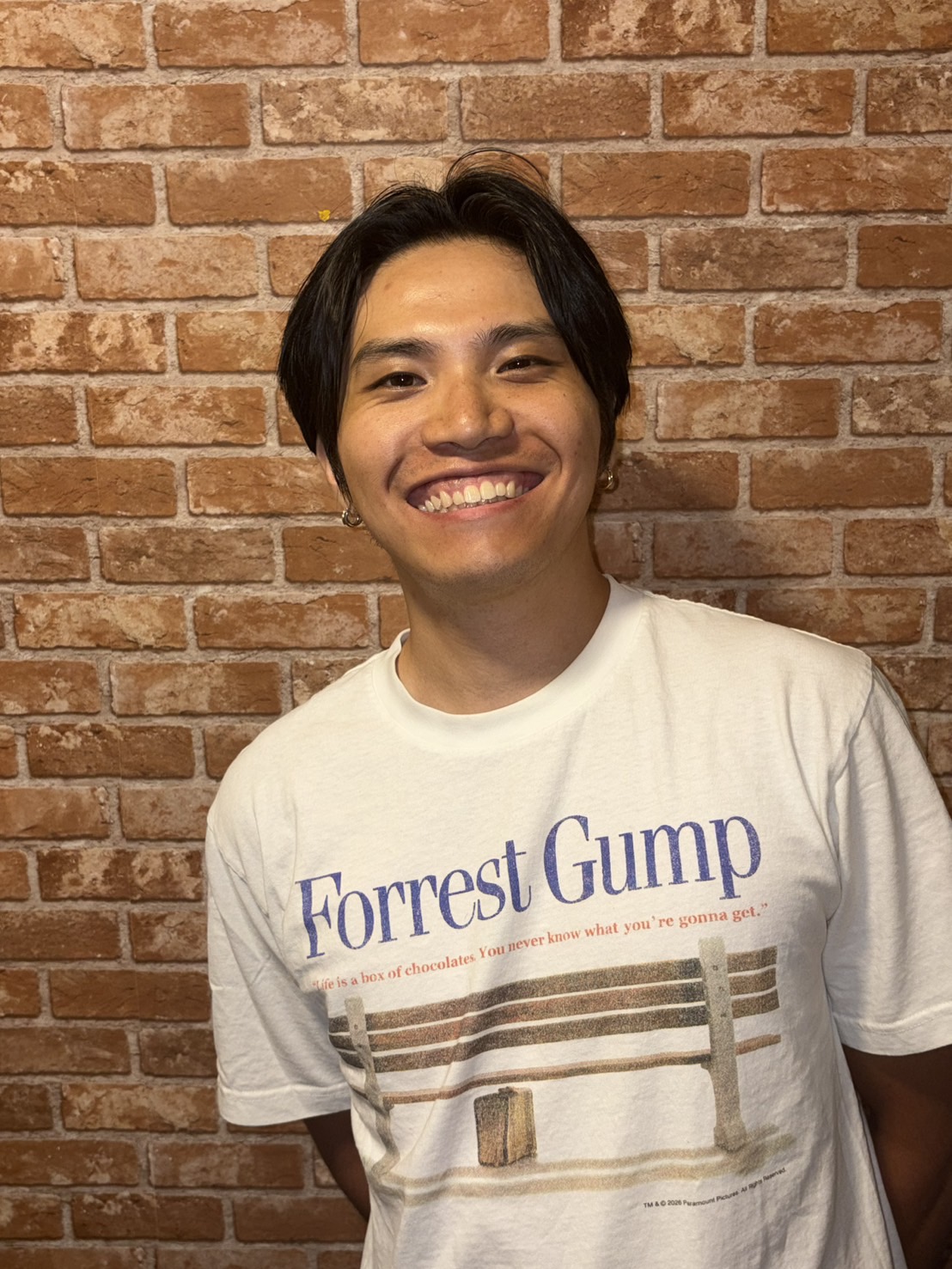
Nishijima is a 28-year-old software engineer from Shibuya, Tokyo, who initially joined the police force after leaving high school. He loves snowboarding and got married earlier this year. Unusually for the CEO of a company, Nishijima has no notable online presence and — because of the language barrier and this interview taking place over email — TechRadar had to ask him to verify his human identity, which he did.
This is the state of play in 2026: one has to check whether the founder of an anti-AI dating app is, in fact, AI.
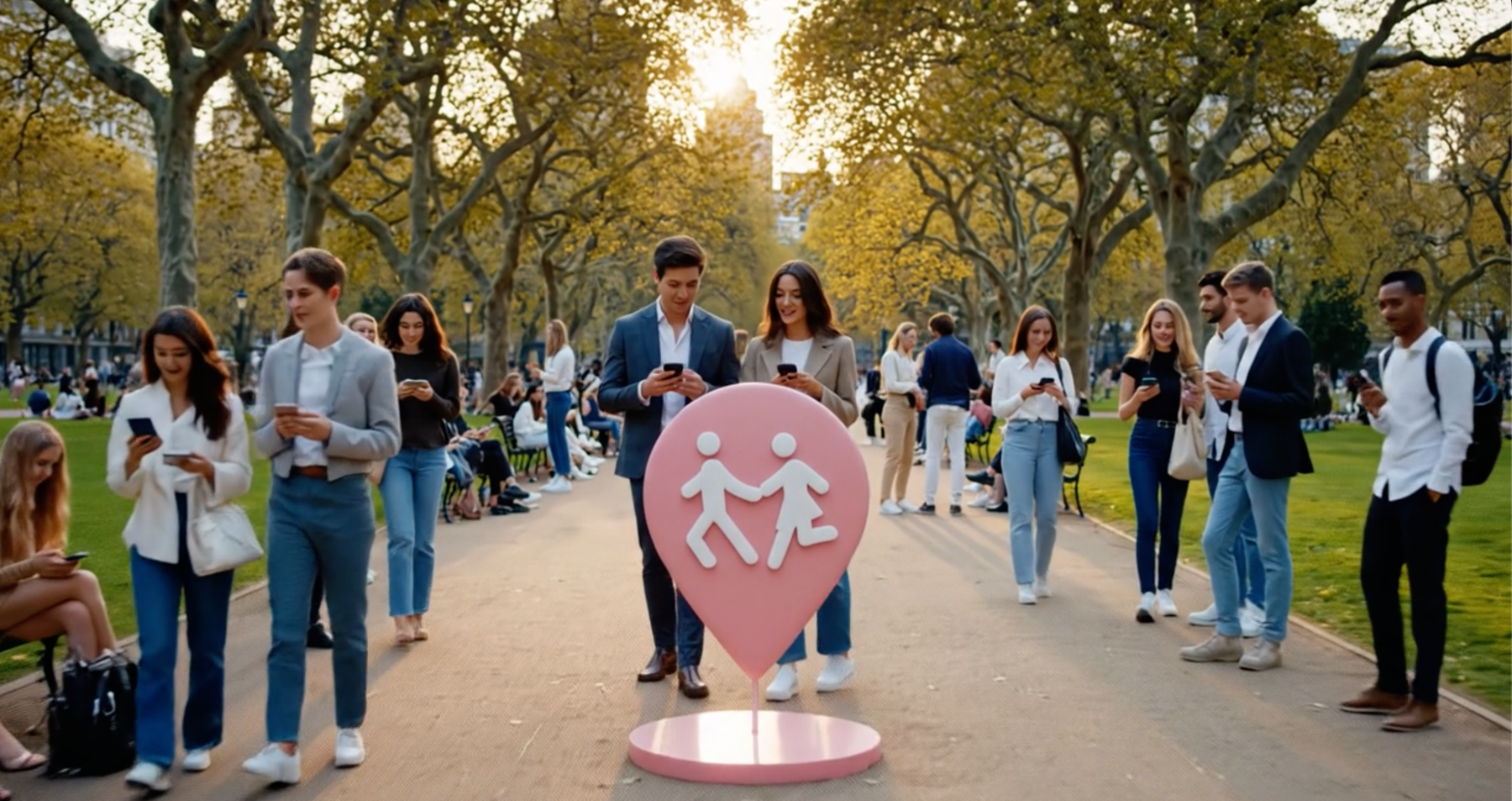
MeetMeetNow is currently available in 194 countries and in over 4,000 cities (meeting spots). It works like this: women can join for free, men pay $35 / £28 per month. Your membership allows you to be notified of a "meetup spot" and time — a fountain, a statue, a clock tower. Press "match" there (your candidates are the MeetMeetNow members at that spot only), and you'll meet face to face, right there and then. No chat window anywhere in the app, and you can only match with any given person once, ever.
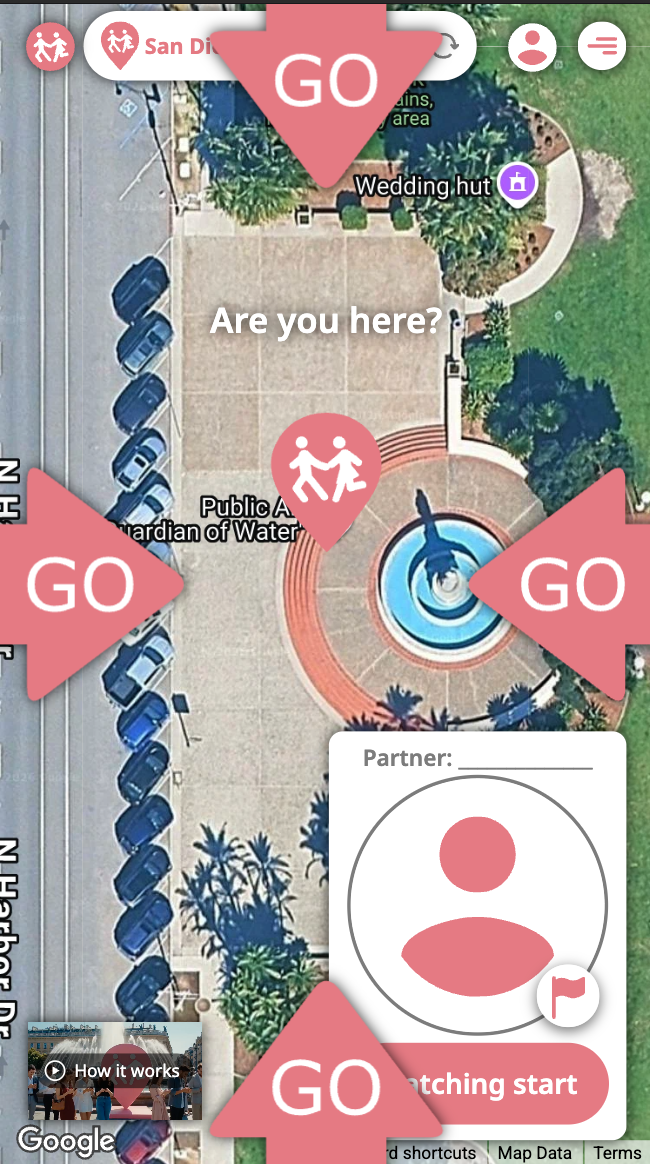
It sounds so simple — albeit decidedly heterosexual, and I have a few safety concerns (we'll get to those). First, I ask Nishijima why he created an app that's about as far away from the two decades of consumer tech that moved dating inside a screen (and most recently to non-human partnerships) as it's possible to get.
"When I was in high school, I didn't want to go to university — I wanted to start a business. Any business," Nishijima says. "Then one day, while reading about the history of the internet, I learned that dating sites had existed — and made money — since the internet's earliest days. Dating appeals to a basic human instinct, so it would always make money. That was my motive (not the noblest one, I admit).
"Tinder was still an unknown name back then; the mainstream was Match.com and in Japan, services called Happy Mail and Wakuwaku Mail. To beat them, I needed to invent something genuinely different.
"One day, skipping school, I sat in the busiest district of town thinking about it — and saw university students hanging around a famous statue, gathering to meet. That was the flash of insight. That's why I built MeetMeetNow."
I ask whether he thinks dating via apps waste time and money; messaging for months without ever meeting, then eventually meeting but it goes nowhere? "Yes, a friend from my hometown filled in his hobbies and background on an app in great detail," he says. "He kept up the conversation, and finally met the woman three months after he started.
"They met just that once. He quit the app that day. He'd paid about ¥40,000 — roughly US$250 / £190 — and spent all that time. 'Couldn't this be simpler?' he asked me."
Safety matters
I mention the cost for men and that male users might try to avoid the fee by perhaps creating a profile using their sister's photo (say), then simply showing up to a meeting spot to avoid paying? "Every user is required to submit an image of an identity document — a driver's license, passport, student ID, or similar", Nishijima says. "On the operations side, we use image-recognition AI combined with human review to check the registration details against the document, and only then approve (or refuse) the account.
"So in your example — a man signing up under his sister's name with a new email address — the registration would fail at this step, because the document wouldn't match the profile."
Okay, but what if one man joined and shared the information with seven male friends on WhatsApp, so that all of them could show up together? "That concern is entirely fair. We built the report function for exactly this kind of situation," Nishijima says. "There is no security staff at the spots, but every meetup spot is selected by us, the operator — always a public place with steady foot traffic.
"On top of that, the screen shows you the face photo of the specific person you are meeting. If someone different — or several people — show up, you can check against the photo before approaching, and you are under no obligation to meet.
"You can simply walk away and report it in the app. The account is then suspended, and everyone who was sharing it loses access."

At a time when people are turning to AI chatbots as romantic partners, after tiring of online dating apps, I ask what Nishijima would say to someone who's on the fence about meeting a real person, in real life, to make a connection? "If I had settled for conversations with an AI, my wife wouldn't be beside me today," he answers. "My family exists because I went out to meet real people.
"Before I met my wife, I met about 30 women through matching apps and local matchmaking events — exchanging contacts, going on dates. But with each of them, it never grew into anything real. The one it clicked with was my wife. We dated for a year and a half and got married. With her, everything simply fell into place.
"So here is what I would say: one day, you will meet a real partner. Even when nothing seems to stick, please don't stop looking. Keep showing up — try every kind of place where people meet, as many times as it takes.
"If you keep moving, you will find your person. Success is waiting on the other side of all those tries. Believe in yourself, hold your head high, and try again."
If the AI dating scene made me fearful regarding the deep disconnect humans are clearly experiencing, to the point that they think fellow humans aren't the answer, Nishijima's outlook does much to revive a sense of hope for humanity, albeit a slightly rose-tinted one; I just worry that not enough has been done here to make sure men don't try to break the rules.

Become a TechRadar Insider by simply clicking 'Join Now' at the top of this page. Have a question? Please email membership@techradar.com
Where does its founder and CEO see MeetMeetNow in 10 years' time? "My goal for the next 10 years is to make today's 'mechanism of meeting' itself a thing of the past," Nishijima says. "Dating sites, matching apps, marriage agencies — the forms differ, but the substance is the same: you compare profiles, exchange messages or sit through interviews, and only then, finally, meet. Meeting is placed at the very end.
"The scene I want to see is clear. People heading out into the city, instead of searching inside a screen. Go to a meetup spot, and you can meet someone right there.
"No months of waiting before a first meeting. Finding a partner in its most efficient form. All over town in the early evening, two people meeting for the first time — my aim is to make that scene ordinary.
"I originally started building this to beat Match.com. What 12 years taught me is that my opponent is not any one company. The opponent is the mechanism itself — as old as the internet."
It's a fair point and Nishijima's aim is a noble one. Although, if we're going back to the ELIZA effect and a computer program created in 1966, the opponent could actually be quite a bit older than the internet.
from Latest from TechRadar https://ift.tt/HcF2kWl
Comments
Post a Comment